.png)

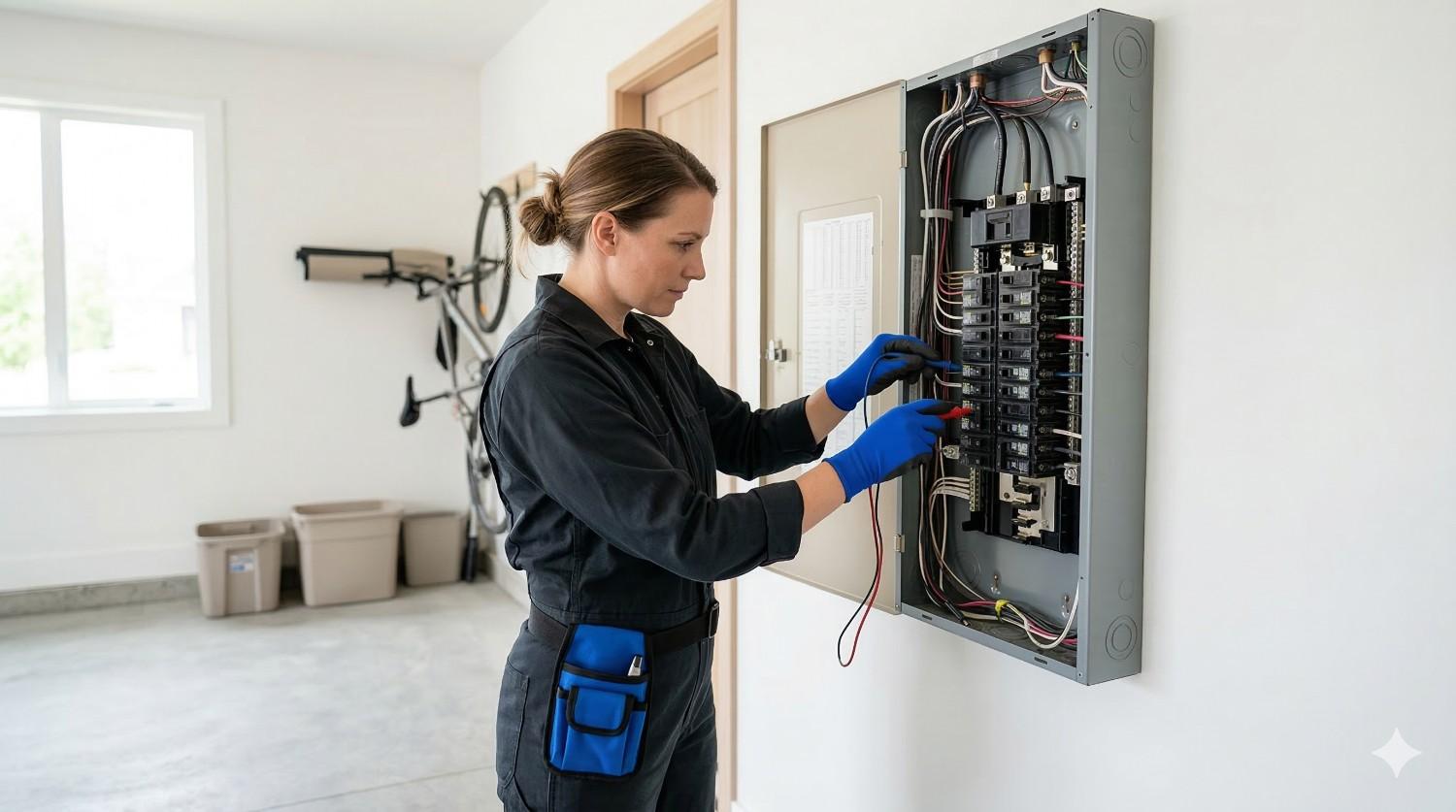
Lights flicker when the microwave runs, a space heater trips a breaker, and you’re planning to add an EV charger. These are common signs that your electrical panel may be approaching its capacity. The main circuit breaker panel is the central hub that distributes electricity throughout your home and protects wiring from overloads. As homes add more appliances and electric technologies, older panels can struggle to keep up with modern demand.
A main circuit breaker panel quote is a professional estimate that evaluates your existing electrical system and outlines repair or upgrade options. It typically includes a visual inspection, a whole-home electrical load calculation, and recommendations that align with current safety standards.
Before exploring panel upgrades or pricing, it helps to understand what a tripped breaker actually means.
A circuit breaker acts as a safety switch. When the electrical current flowing through a circuit exceeds the breaker’s rated capacity, the breaker automatically shuts off power to that circuit. This prevents wires from overheating and reduces the risk of electrical fires.
Breakers may trip for several reasons, including:
Occasional trips can be normal, but frequent breaker trips often indicate that circuits are overloaded or that the electrical panel is undersized for the home’s current usage.
Many homeowners request a panel quote when planning a new electrical addition or after noticing warning signs in their electrical system.
Common reasons include:
Modern homes often require more electrical capacity than panels installed decades ago were designed to provide.
A thorough electrical panel inspection involves more than simply opening the panel door. Electricians evaluate the entire system to determine whether the panel is operating safely and whether it has enough capacity for future loads.
A professional assessment typically reviews:
Electricians may also perform a load calculation, which estimates how much electrical demand the home places on the panel and whether the service size, commonly 100, 150, or 200 amps, is adequate.
The cost of an electrical panel repair or upgrade depends on several factors. These include the size of the service upgrade, the complexity of wiring changes, permit requirements, and whether utility coordination is necessary.
Typical cost factors include:
Because every home’s electrical system is different, a detailed quote helps clarify the scope of work and ensures pricing reflects the actual conditions at the property.
Electrical panel upgrades must follow the National Electrical Code along with regional building regulations and utility requirements.
In areas such as Los Angeles, the permitting and inspection process often involves coordination with local building departments and utilities. Similar considerations apply in other regions, such as Chicagoland, where municipal rules and utility standards may shape installation timelines and costs.
A licensed electrician typically handles permits, inspections, and any required coordination with the utility provider to ensure the project meets all safety and code requirements.
A tripped breaker is often the first visible sign that an electrical system may need attention. While it is designed to protect the home, repeated trips can signal overloaded circuits, aging equipment, or the need for additional electrical capacity.
Understanding what causes breaker trips and how electricians evaluate electrical panels, helps homeowners decide whether a repair, circuit upgrade, or full panel replacement is the right solution.
A breaker that trips is doing exactly what it is designed to do: interrupt power when something exceeds safe electrical limits. The important question is not just that it tripped, but why. The pattern behind breaker trips can reveal valuable information about the condition and capacity of your electrical system.
A circuit breaker that automatically opens a circuit when current or a fault condition exceeds its design limit, cutting power to prevent overheating, shock, or fire.
Inside every circuit breaker are two protection mechanisms. A thermal element reacts to sustained overloads by heating up and eventually opening the circuit. A magnetic mechanism responds almost instantly to severe faults such as short circuits.
This dual-response design, standardized under the National Electrical Code (NFPA 70), protects the wiring hidden inside your walls. The breaker is sized for the circuit’s conductors, ensuring that wiring never carries more current than it can safely handle.
An overload occurs when several high-power appliances operate on the same circuit at once. Devices such as space heaters, hair dryers, microwaves, and toasters are common contributors, especially on typical 15- or 20-amp kitchen and bathroom circuits.
During an overload, the breaker usually warms slightly and trips after a short delay. That delay happens because the thermal element inside the breaker needs time to heat up before opening the circuit.
Solutions may include redistributing appliances across circuits or installing a dedicated circuit for high-demand devices. These are common adjustments electricians look for during a panel evaluation.
A short circuit happens when a hot conductor contacts neutral or another energized conductor. This can occur because of damaged cords, loose wiring connections, or insulation failures.
When a short circuit occurs, current spikes dramatically and the breaker trips almost instantly with a sharp click. Signs of a short may include a scorched outlet, a tripped breaker that will not reset, or the smell of burnt plastic.
Because short circuits can damage wiring and equipment, the cause should always be identified and repaired before restoring power to that circuit.
A ground fault occurs when electrical current leaks away from its intended path and flows toward ground. Moisture, worn insulation, or damaged appliances can cause this condition.
This is why Ground Fault Circuit Interrupters are required in locations such as bathrooms, kitchens, garages, and outdoor outlets. GFCI devices trip quickly when they detect even small amounts of leakage current, usually around 4–6 milliamps, to reduce shock risk.
If a GFCI trips repeatedly, it often indicates an appliance problem or a wiring issue that requires investigation rather than repeated resets.
Arc faults occur when electricity jumps across loose or damaged connections, creating small sparks under load. These arcs can generate heat without drawing extremely high current, making them harder to detect using standard breakers alone.
The U.S. Consumer Product Safety Commission has linked arc faults to thousands of residential electrical fires each year. For this reason, modern electrical codes require Arc Fault Circuit Interrupters in most living areas of a home.
Symptoms of arc faults may include intermittent breaker trips, buzzing sounds from outlets, or visibly damaged cords.
Frequent breaker trips can signal that a circuit is undersized for current household demands. If the same breaker trips whenever multiple appliances run together, that circuit may simply need additional capacity.
If different breakers trip at various times, or if lights dim when large appliances start, it may indicate that the entire electrical service is approaching its limit. Older panels can also develop worn breaker contacts, which increase heat and reduce reliability.
Homes built decades ago often have fewer circuits and lower service capacity than modern households require, especially with today’s kitchens, HVAC systems, and electronics.
Certain symptoms suggest deeper electrical issues that should be evaluated by a professional.
Red flags include:
These conditions can indicate loose connections, moisture intrusion, or past wiring shortcuts that should be corrected for safety and code compliance.
Homeowners should not remove the panel cover themselves. A licensed electrician can safely inspect the interior, test connections, tighten terminals to manufacturer torque specifications, and document any problems.
Electrical loads are easier to understand when translated into real numbers. A typical 1,500-watt space heater draws about 12.5 amps at 120 volts. A 1,200-watt microwave uses about 10 amps.
If both appliances run on the same 20-amp kitchen circuit, the combined load exceeds the circuit’s rating. In this situation, a delayed breaker trip is expected, it is doing exactly what it was designed to do.
Information like this helps electricians decide whether outlets should be reassigned, a new 20-amp circuit should be installed, or whether the home’s service capacity needs reevaluation.
Breaker trips, heat, buzzing, or electrical odors are not just inconveniences, they are diagnostic clues about how your electrical system is performing.
If these patterns sound familiar, a licensed electrician can perform a detailed on-site evaluation and provide a main circuit breaker panel quote that documents electrical load, identifies safety corrections, and outlines whether circuit additions or a panel upgrade may be necessary.
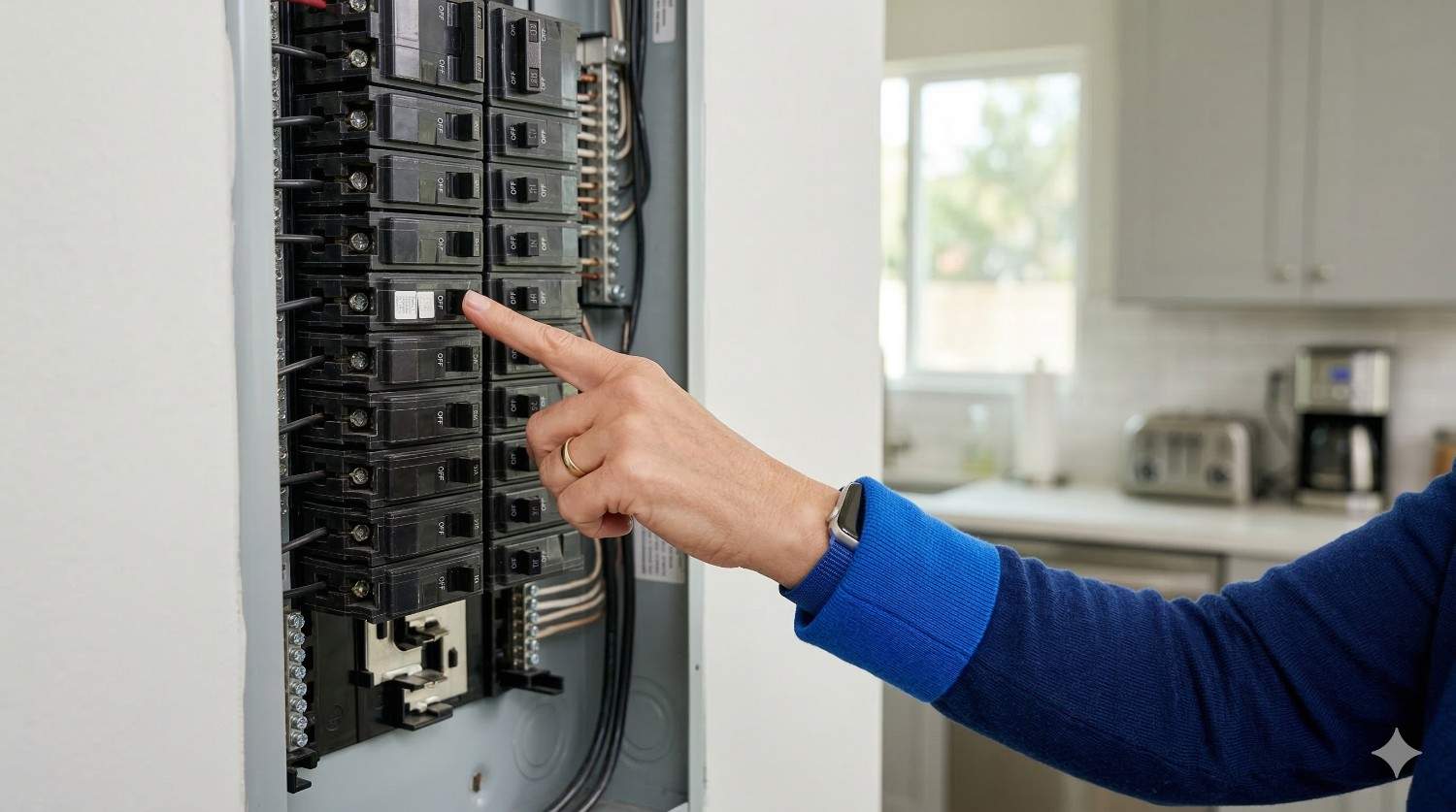
Renovations, new high-demand appliances, or persistent electrical issues are common reasons to schedule a professional evaluation of your electrical service and main panel. Addressing capacity and safety early helps prevent hazards, reduces unexpected outages, and ensures your electrical system can support future upgrades such as EV charging, heat pumps, or new living spaces.
Home improvements, especially kitchens, bathrooms, or room additions, often increase electrical demand significantly. Modern kitchens alone can require multiple dedicated circuits under the National Electrical Code.
For example, typical kitchen upgrades may include:
When these loads are combined, older homes with 60- or 100-amp service can quickly exceed safe electrical capacity.
Electric vehicle charging is one of the most common reasons homeowners upgrade electrical panels. A Level 2 EV charger typically draws between 32 and 48 amps and is treated as a continuous electrical load.
Under NEC Article 625, continuous loads must be sized at 125 percent of their operating current. In practice, this means an EV charger often requires a 40- to 60-amp breaker along with sufficient spare capacity in the electrical panel.
Homes with 100-amp service that already power central air conditioning, electric dryers, and kitchen appliances often have little remaining capacity before adding EV charging.
Some modern appliances require substantial electrical capacity. Equipment such as hot tubs, electric tankless water heaters, and heat pump systems can place significant loads on an electrical panel.
Examples include:
In some cases, a single new appliance can approach or exceed the capacity of older electrical services, making a panel upgrade necessary.
Electrical symptoms often provide early warnings about panel capacity or wiring problems. Repeated breaker trips usually indicate overloaded circuits or electrical faults.
Flickering lights when large appliances start may suggest voltage drop, an overloaded circuit, or an electrical service operating near its limits.
Breakers are designed to protect wiring, so repeated trips should be treated as diagnostic signals rather than nuisances.
Electrical panels installed decades ago may not meet the needs of modern homes. Panels more than 20 to 25 years old may lack sufficient circuit capacity and may not support newer protection requirements such as AFCI and GFCI breakers.
Some older panel brands, including certain Federal Pacific Electric or Zinsco models, have documented safety concerns and are commonly replaced during electrical upgrades.
Another warning sign is a panel with no available breaker spaces. Homeowners sometimes resort to unsafe practices such as double-lugging wires or misusing tandem breakers instead of installing proper circuit capacity.
Visible damage or environmental exposure can also indicate that a panel needs attention. Warning signs include:
Moisture exposure, particularly in basements or garages, can accelerate corrosion and weaken electrical connections, increasing the risk of overheating or electrical arcing.
Electrical panels are also reviewed during home sales, inspections, and insurance underwriting. Inspectors and insurers often examine:
A documented panel assessment and any necessary upgrades can simplify property transactions and improve insurability.
If any of these conditions apply to your home, it may be time to request a main circuit breaker panel quote based on a professional on-site inspection and a whole-home electrical load calculation.
This evaluation helps determine whether your existing panel can safely support current and future electrical demand, or whether upgrades are needed to prepare your home for the next generation of appliances and electrification.
When frequent breaker trips appear or new high-demand equipment is planned, the next question becomes clear: how much electrical capacity does your home actually need? The answer isn’t based on guesswork. Electricians use a structured process called an electrical load calculation, recognized by the National Electrical Code and local building departments, to determine the appropriate service size and panel capacity.
You can think of it like a financial budget for electricity. The calculation adds up current electrical use, accounts for new equipment you plan to install, and ensures the electrical “bank account” can support peak demand safely.
A professional load calculation starts with the basics of the home’s electrical demand.
General lighting and receptacle loads are estimated based on the home’s square footage. Kitchens and laundry rooms receive additional consideration because they typically use dedicated circuits and support multiple high-demand appliances.
From there, the calculation includes the actual wattage or nameplate ratings of major equipment such as:
The calculation also recognizes that not every appliance runs at full power simultaneously. To reflect real-world usage patterns, the NEC applies demand factors, which reduce the estimated load where appropriate so systems are not oversized unnecessarily.
Finally, the calculation compares heating and cooling equipment. Because these systems usually operate in different seasons, only the larger load, heating or cooling, counts toward the final demand.
Electric vehicle charging introduces an important variable in modern load calculations. Level 2 chargers typically draw significant current and are considered continuous loads, meaning they may operate for extended periods.
Under NEC guidelines, continuous loads are typically sized at 125 percent of the expected operating current. This requirement ensures that circuits and panels can handle sustained charging without overheating.
As EV ownership grows, these loads often become the tipping point that pushes older 100-amp electrical services toward their limits.
Two electrical system components are often confused: service size and panel capacity.
Both must be adequate for the home’s electrical demand. In some cases, installing a subpanel can create additional circuit space without increasing the service capacity. However, if the service itself is undersized, a full service upgrade may still be necessary.
Modern solutions such as smart load centers or EV charging load management systems can sometimes delay a service upgrade, but these systems must be designed and permitted correctly to meet code requirements.
Load calculations do more than guide design decisions, they also support the permitting process. Local building departments often require documentation showing how the proposed service size was determined.
Utilities must also coordinate service upgrades. This may involve scheduling temporary disconnects, approving new meter equipment, and verifying that service entrance conductors meet capacity requirements.
A clear, code-compliant load calculation helps move these steps forward smoothly because it demonstrates that the design meets electrical standards and inspection requirements.
A well-prepared load calculation can also serve as a roadmap for future upgrades. If homeowners plan to install an EV charger, finish a basement, or switch to electric heating in the near future, those loads can be included in the calculation.
Right-sizing electrical capacity is not about installing the largest possible service. Instead, it means matching capacity to current usage while allowing reasonable headroom for future plans.
Once the electrical demand is calculated, the next step is translating that design into real equipment and installation work.
That means determining what components must be upgraded or replaced, from the main breaker panel and service conductors to grounding systems, labeling, and the safety protection devices required by modern electrical codes.
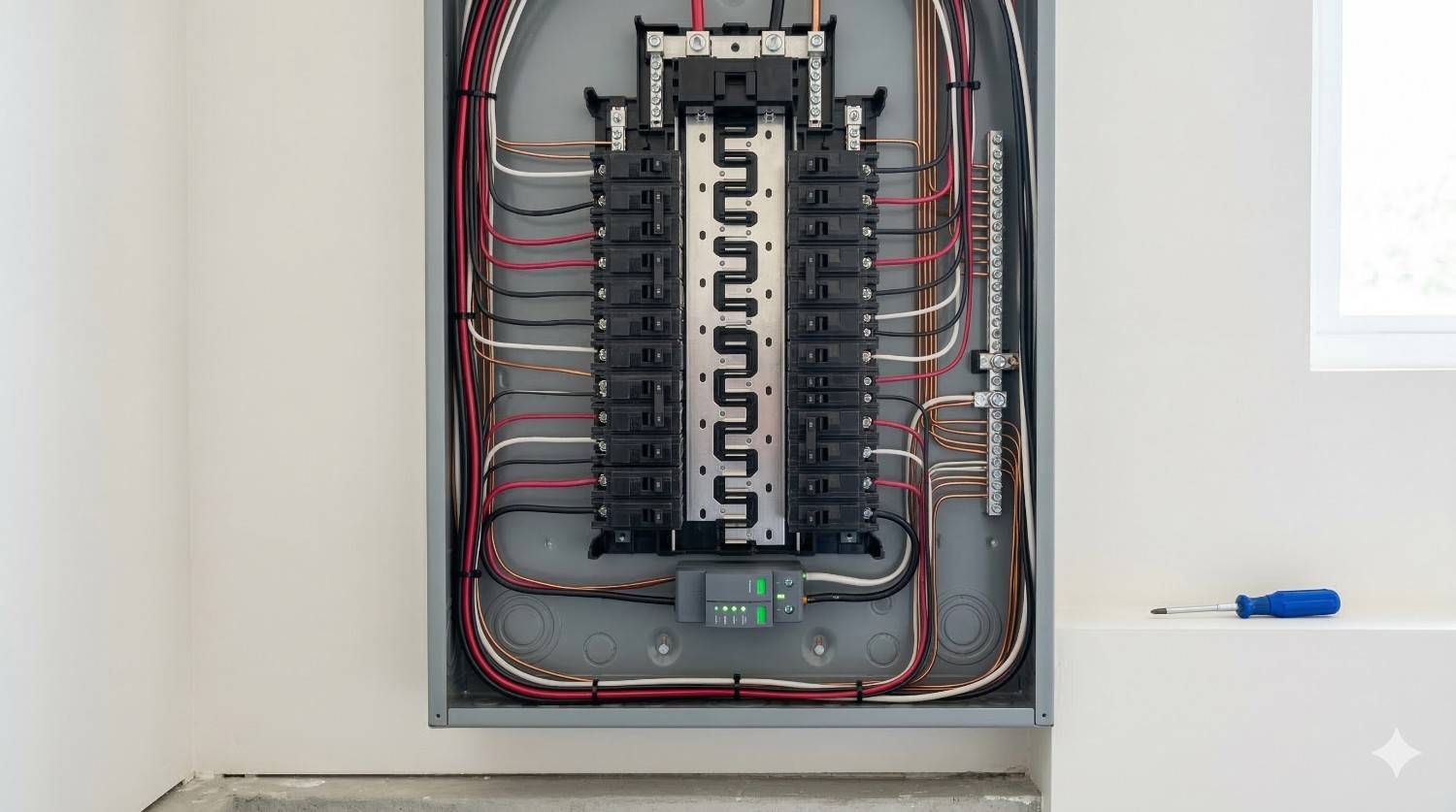
A modern electrical panel upgrade involves far more than replacing a metal box on the wall. It is a coordinated set of safety improvements, capacity upgrades, and documentation steps that bring a home’s electrical system in line with current standards. Understanding what is included helps homeowners compare proposals accurately and prepare their electrical system for both current loads and future upgrades.
Consider Maya, whose 1980s electrical panel began tripping frequently after she added a home office and installed a new electric range. After completing a load calculation, her licensed electrician recommended upgrading her electrical service to 200 amps.
The project included replacing the aging panel, correcting grounding and bonding connections, adding required arc-fault and ground-fault protection, and installing a whole-home surge protector. The work was completed in one day with proper permitting and inspection, along with a clear circuit directory that eliminated the need to reset breakers whenever multiple appliances were running.
A panel upgrade usually begins with installing new service equipment designed to match the home’s electrical demand and the utility provider’s requirements.
This often includes:
If the service size increases, for example, from 100 amps to 200 amps, the electrician coordinates with the utility for temporary power disconnection and reconnection. In some cases, meter fittings, service entrance cables, or conduit may also need replacement to support the higher capacity.
During the upgrade, electricians reorganize and reconnect existing branch circuits inside the new panel. This step helps eliminate unsafe wiring practices such as double-lugged breakers or overcrowded connections.
Modern electrical codes also require specific safety protection for many circuits. Electricians may install:
In many cases, dual-function breakers provide both AFCI and GFCI protection in a single device, simplifying panel organization while meeting code requirements.
A key part of any panel upgrade involves verifying and correcting the home’s grounding and bonding system.
Proper grounding ensures that electrical faults safely return to earth rather than traveling through wiring or appliances. Bonding connects metal components, such as piping or panel enclosures, so they remain at the same electrical potential and reduce shock risks.
Common corrections may include:
These improvements help align the home with current electrical safety standards.
Clear documentation is another essential part of a professional panel upgrade. Each breaker in the panel should be labeled with an accurate description of the circuit it controls.
Electricians often provide:
This documentation is useful for future maintenance, renovations, and real estate or insurance records.
Many modern panel upgrades include a whole-home surge protective device. Installed at the panel, this device helps protect appliances and electronics from voltage spikes caused by utility switching events or lightning-related disturbances.
For homeowners like Maya, panel-mounted surge protection provides an additional safeguard for sensitive equipment such as HVAC systems, kitchen appliances, and office electronics.
A professional panel upgrade follows a structured process that ensures safety and compliance.
Homeowners should expect:
This formal process distinguishes a full electrical upgrade from a simple panel replacement and helps ensure the system will operate safely for decades.
Understanding what is included in a modern upgrade makes it easier to compare any main circuit breaker panel quote on equal terms. When each proposal covers the same essential elements, service equipment, safety protections, grounding corrections, documentation, and inspection, you can evaluate the value of each option more confidently.
When requesting an electrical panel estimate, the way the quote is prepared can significantly affect both the final price and the overall project experience. Some proposals rely on quick photos or brief phone calls, while others involve a detailed on-site inspection and a formal electrical load calculation. Understanding the difference helps homeowners avoid unexpected costs, failed inspections, or delays.
A common starting point for panel quotes is the photo-only estimate. A homeowner sends a picture of the panel, and the contractor offers a price for replacing it with a similar unit. This approach is fast and often produces a low initial number because it assumes the work is straightforward.
However, a photo rarely reveals the full condition of the electrical system. Once the panel is opened, electricians may discover hidden issues such as:
If any of these issues appear during installation, the project scope expands and change orders may follow. What began as a simple panel replacement can quickly turn into a larger electrical upgrade requiring additional materials, inspections, and scheduling adjustments.
A more accurate approach begins with an on-site evaluation and a load calculation performed under NEC Article 220. During this process, the electrician reviews the home’s electrical usage and planned upgrades before recommending panel size and service capacity.
This evaluation typically includes:
In many older homes with 100-amp service, the load calculation may reveal that current demand already approaches the system’s limit. Adding modern appliances or EV charging can push the calculated demand beyond what a simple panel replacement can safely support.
When that happens, the proposal may recommend upgrading to a larger service, often 200 amps, along with the associated equipment and utility coordination.
A well-prepared panel quote should clearly describe the full scope of work required to complete the upgrade safely and meet inspection requirements.
Typical elements include:
By identifying these elements in advance, the electrician can provide a realistic project timeline and minimize unexpected adjustments.
Panel upgrade proposals may appear in either lump-sum or line-item formats.
A lump-sum quote provides a single total price. This can work well for straightforward replacements but may hide the factors driving the final cost.
A line-item quote breaks down individual components such as service size, number of breakers, surge protection, panel relocation, drywall repair, and utility coordination. This format makes it easier to compare bids and understand why one proposal may differ from another.
Clear documentation also helps distinguish between a panel replacement and a full service upgrade, which involve different materials, labor, and permitting steps.
Electrical panel upgrades almost always involve permits and inspections. Local building departments review the work to ensure it meets electrical code requirements.
In many regions, utilities must also coordinate temporary power disconnection and reconnection while service equipment is replaced. These steps can influence project scheduling as much as the installation work itself.
Including permit timelines and inspection sequencing in the quote helps homeowners understand how long the project may take from start to finish.
While a quick estimate may appear attractive, it often leaves important questions unanswered. The lowest initial quote can lead to higher costs if hidden issues emerge during installation.
A reliable estimate is built on:
Providing photos of the existing panel and a list of major appliances can help begin the conversation. However, an in-person evaluation is usually necessary to finalize an accurate main circuit breaker panel quote.
This careful approach protects your timeline, reduces the risk of unexpected expenses, and ensures that your electrical system upgrade meets both safety standards and future power needs.

Many homeowners assume that if breakers trip frequently, the solution is installing a larger main panel, often upgrading directly to 200-amp service. The reasoning sounds logical: if the electrical system has more capacity, the problem should disappear.
In reality, breaker trips rarely originate from the size of the main panel alone.
Circuit breakers protect the specific wiring on each branch circuit, not just the overall service. Most household circuits are rated for 15 or 20 amps, and the breaker trips when the electrical current exceeds what those wires can safely handle.
Upgrading the main panel does not change the limits of those individual circuits. If a kitchen circuit is rated for 20 amps, it will still trip at that level whether the house has a 100-amp service or a 200-amp service.
This means a larger panel will not fix problems such as:
A panel upgrade can be part of a long-term plan, but it does not stop a breaker from protecting an overstressed circuit.
Electrical safety organizations consistently emphasize that hazards often stem from heat, arcing, or poor electrical connections, not simply from undersized service capacity. Issues such as worn breakers, loose wiring, and overloaded circuits are common causes of electrical problems in homes.
Guidance for EV charging installations also highlights the importance of performing accurate load calculations rather than assuming a larger service is automatically required.
Instead of asking, “How large of a panel do I need?” a more useful question is:
A reliable main circuit breaker panel quote should include:
This approach identifies the real causes of electrical issues and targets the correct solutions, whether that means adding dedicated circuits, upgrading safety protection, repairing wiring, or increasing service capacity when justified.
By focusing on the root cause rather than simply installing a larger panel, homeowners end up with an electrical system that operates more safely, more efficiently, and with fewer interruptions.
Your electrical panel is more than a metal enclosure, it is the central gateway for everything your home can power today and in the future. As households adopt EV chargers, heat pumps, induction cooking, and connected appliances, the panel becomes critical infrastructure that determines how easily those upgrades can be supported.
Planning ahead helps ensure your electrical system grows with your home instead of becoming a limitation.
Future planning starts by looking at the electrical demands of common upgrades.
Typical residential loads include:
Homes that once operated comfortably on 100-amp service may start to feel constrained as these larger loads accumulate. When multiple high-demand appliances operate simultaneously, available capacity can quickly shrink.
In many regions following recent National Electrical Code updates, panel upgrades also include safety improvements such as whole-home surge protection and expanded AFCI and GFCI coverage. These upgrades help protect appliances and electronics from voltage spikes, arc faults, and ground faults.
Electrical panels are designed to last for decades when properly installed and maintained. Routine observation and preventive care can extend the life of the system and reduce the likelihood of unexpected outages.
A simple maintenance routine includes:
If a remodeling project is planned, new dedicated circuits should be installed rather than tapping into existing outlets that may already be near their limits.
A licensed electrician can also periodically verify that grounding and bonding connections remain secure and code compliant.
Maintaining records of electrical work provides long-term value. Clear documentation makes troubleshooting easier, supports home resale, and can simplify insurance or inspection processes.
Helpful records include:
Over time, this information becomes a reference point that helps electricians understand the system quickly if future upgrades are needed.
Future-proofing an electrical system means making decisions that preserve flexibility.
If service capacity cannot be increased due to utility or building limitations, load management systems can help prioritize large loads such as EV chargers or water heaters during off-peak periods.
Planning ahead also reduces future construction disruption. For example:
These steps help prevent additional wall openings, equipment replacements, or permit revisions later.
A main circuit breaker panel quote should not be viewed as a one-time snapshot. Instead, it can serve as a baseline document that reflects your home’s electrical capacity and anticipated upgrades.
Revisiting that information when planning projects, such as EV charging, solar installation, or appliance upgrades, helps ensure the electrical system remains properly sized.
Breaker trips, flickering lights, or an overcrowded panel are not problems to ignore, they are signals about the health and capacity of your electrical system. The most reliable next step is a professional evaluation that combines an on-site inspection with a code-based load calculation, helping determine whether the solution is a dedicated circuit, targeted repairs, or a full service upgrade. Taking this approach also keeps permitting and utility coordination on track, especially in regions such as Los Angeles and Orange County.
Treat your electrical panel as infrastructure for what comes next, EV charging, modern appliances, or future remodeling projects. Right-sizing capacity today and documenting the work helps support inspections, insurance reviews, and long-term home value. If you are planning upgrades or troubleshooting recurring electrical issues, requesting a main circuit breaker panel quote based on real measurements ensures you receive clear recommendations and accurate pricing.
NQ Electric provides residential and light commercial electrical services across Los Angeles and Orange County, including panel upgrades, wiring, EV charger installation, and electrical troubleshooting. Our licensed electricians perform detailed assessments, provide line-item proposals, and coordinate permits, inspections, and utility requirements from start to finish. Request a quote from NQ Electric to receive a clear, code-compliant plan that safely powers your home today and prepares it for tomorrow’s electrical demands.
The main circuit breaker panel is the central distribution point for a home’s electrical system. It receives power from the utility service and routes that electricity through individual branch circuits that supply outlets, lighting, and appliances throughout the house.
The main breaker can shut off power to the entire home and limits the total current flowing into the panel based on its amperage rating. Individual branch circuit breakers protect the wiring on each circuit. If current exceeds safe levels or a fault occurs, the breaker trips and interrupts power before wires overheat or equipment is damaged.
A tripped breaker means the device opened the circuit to prevent unsafe electrical conditions. Breakers are designed to stop power flow when current exceeds safe limits or when certain types of electrical faults are detected.
Common causes include:
Frequent breaker trips can also indicate an undersized circuit, aging electrical equipment, or wiring problems that should be inspected.
Several symptoms can indicate an electrical panel that is overloaded or deteriorating. These signs suggest that the system should be evaluated by a licensed electrician.
Typical warning signs include:
Panels older than 20–25 years or panels with no available breaker spaces often benefit from a professional inspection to determine whether upgrades are needed.
A professional assessment begins with a detailed inspection of the electrical panel and related components. The electrician evaluates panel condition, circuit labeling, available breaker space, and any signs of overheating or corrosion.
The inspection also verifies grounding and bonding connections and checks for required safety protections such as AFCI and GFCI breakers. A whole-home electrical load calculation is typically performed to determine whether the service capacity matches the home’s current and future electrical demand.
Based on these findings, the electrician may recommend repairs, adding dedicated circuits, or upgrading the electrical service and panel with the required permits and inspections.
Electricians follow standardized procedures from the National Electrical Code to determine a home’s electrical demand. The calculation begins with general lighting and receptacle loads based on the home’s square footage.
Next, the nameplate ratings of major appliances, such as ranges, dryers, HVAC equipment, and water heaters are added. NEC demand factors are then applied so the final number reflects realistic usage patterns rather than assuming every device runs at maximum power simultaneously.
Only the larger of the heating or cooling loads is included, since they typically operate in different seasons. Continuous loads, such as EV chargers, are sized at 125 percent of their operating current. The result helps determine whether a 100-amp, 150-amp, or 200-amp service is appropriate.
A typical panel upgrade involves installing a new, listed electrical panel and main breaker rated for the home’s required service capacity. Electricians reorganize branch circuits and install required AFCI and GFCI protection according to current electrical codes.
Additional work may include correcting grounding and bonding connections, labeling circuits clearly, and installing whole-home surge protection. The project is performed under permit, inspected by the local authority, and coordinated with the utility if service size changes require temporary power disconnection.
Not necessarily. Breakers protect the wiring on each individual circuit. A 20-amp kitchen circuit will still trip at approximately 20 amps whether the home has a 100-amp or 200-amp main panel.
Frequent trips in kitchens are usually resolved by adding or redistributing dedicated small-appliance circuits, repairing wiring faults, or ensuring appliances are properly distributed across circuits.
